
Routine Maintenance
Public Works | Road Maintenance Division
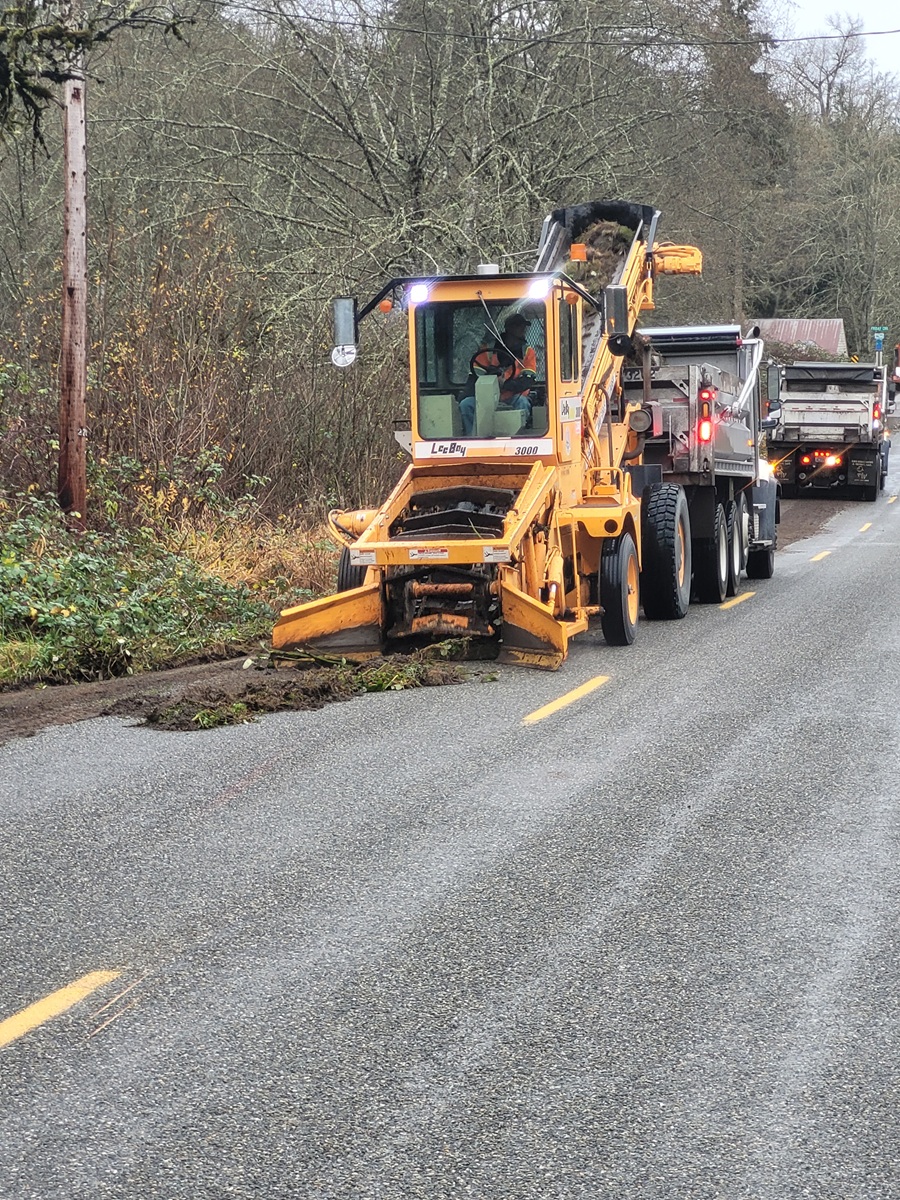
Sod Removal
Remove excess buildup of sod, soil, and vegetation along the roadway edge and within roadside drainage areas to restore proper water flow and drainage. Over time, sod and other material can build up along the edge of the pavement, creating a barrier that prevents water from leaving the roadway and entering the ditch or drainage system.
Sod removal is typically performed in preparation for roads that are scheduled to be resurfaced. Removing this buildup allows crews to establish the proper roadway profile and drainage before resurfacing work begins. Maintaining clear drainage paths helps reduce standing water, protect the roadway from moisture-related damage, and extend the useful life of the new pavement.
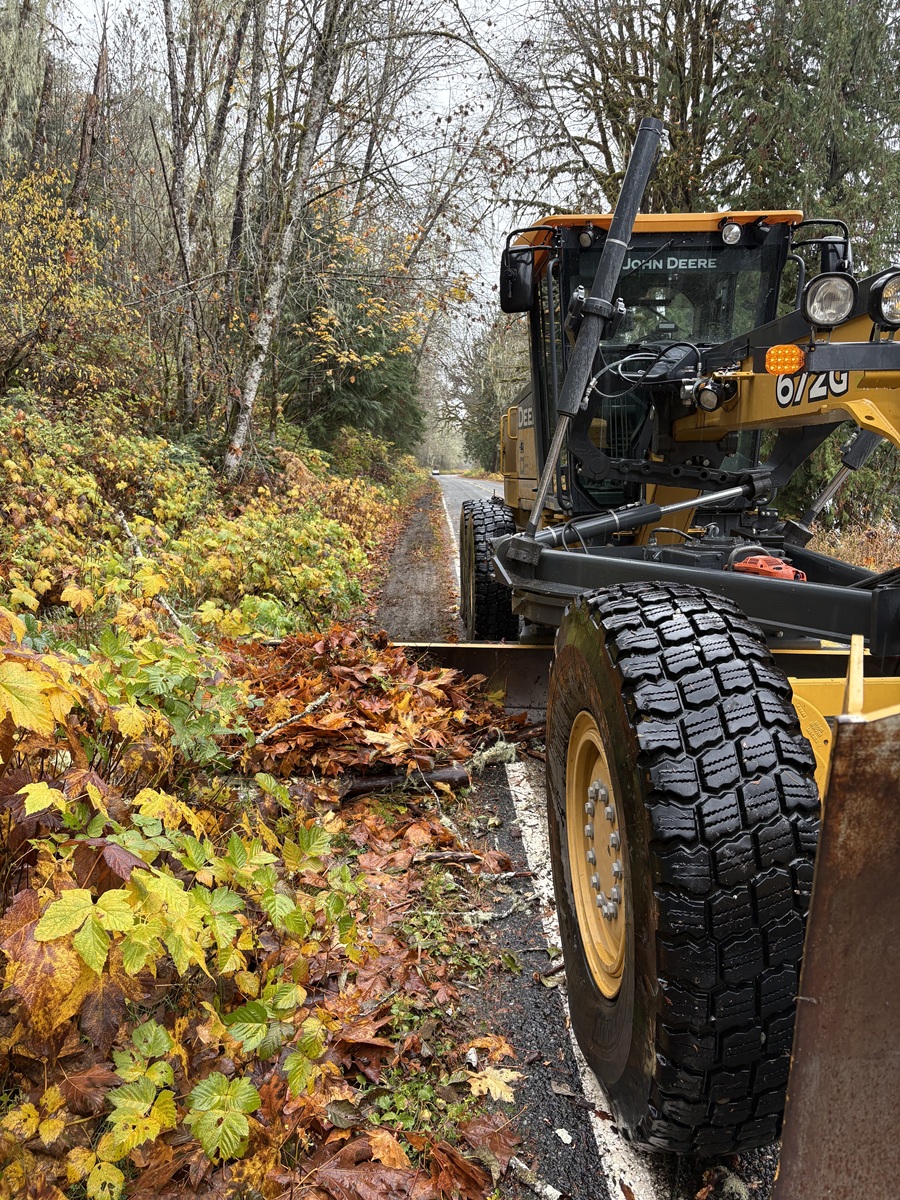
Grading, Roadways, and Shoulders
Grade and shape gravel roadways and shoulders to maintain a smooth, safe, and properly drained driving surface. Crews use graders to restore the road crown, cut down high spots, fill potholes, and redistribute existing gravel evenly across the roadway.
Shoulder material is pulled back into low areas and shaped to provide a consistent transition between the roadway and ditch. Regular grading helps correct surface irregularities, reduce standing water, improve drainage, and maintain the overall condition of gravel roads.
Crews also address areas where traffic, weather, and normal wear have caused rutting, washboarding, or other surface deterioration. This work is performed as needed throughout the year, with additional attention given following heavy rain, snow, or other weather events that can significantly impact roadway conditions.
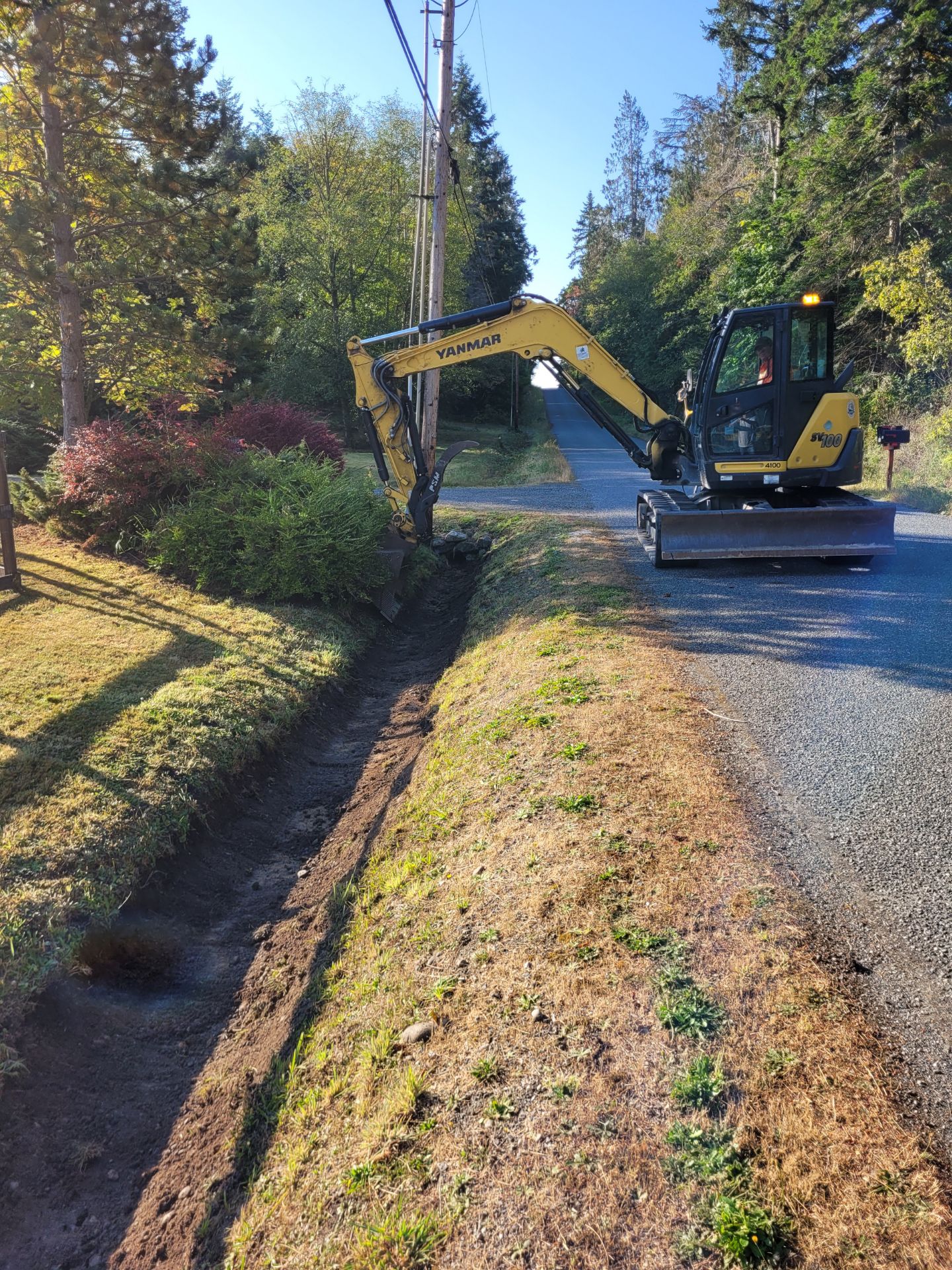
Ditching
Clean and reshape the bottom of roadside ditches to restore and maintain proper drainage along the roadway. Ditching is performed to remove obstructions, sod buildup, sediment, debris, and other accumulated materials that can restrict or redirect the natural flow of water. Crews use excavators and other equipment to remove excess material and establish a consistent ditch profile that allows water to move efficiently away from the roadway.
During ditching operations, crews work to preserve as much existing vegetation as practical. Established vegetation helps stabilize the ditch, reduce erosion, and prevent excessive sediment from washing into the drainage system. Material is removed only as necessary to restore the intended drainage capacity while minimizing disturbance to the surrounding area.
Properly maintained ditches are an important part of the county's stormwater system. They collect runoff from the roadway and surrounding areas, provide a path for water to flow, and help prevent water from ponding along the road surface.
Keeping ditches open and properly shaped also reduces the potential for water to undermine the roadway, damage shoulders, create potholes, and contribute to premature pavement deterioration.
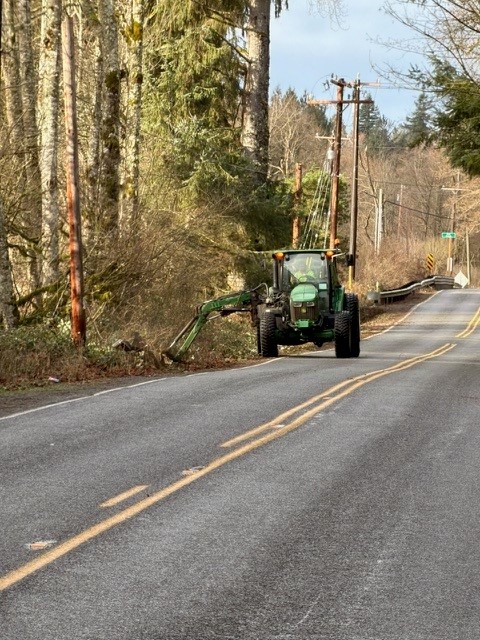
Mowing and Brush Cutting
Mow and cut roadside vegetation to maintain clear sight distances, improve drainage, and keep roadways and shoulders safe and accessible. Crews remove excessive grass, brush, weeds, and other vegetation that can encroach on the roadway, obstruct signs, limit visibility at intersections, or interfere with drainage ditches and culverts.
Mowing and brush cutting is performed throughout the year as needed. Crews focus on maintaining adequate roadside clearance while preserving desirable vegetation where possible. Regular vegetation management helps prevent overgrowth, keeps drainage functioning properly, improves visibility for motorists, pedestrians, and cyclists, and maintains a safe and orderly roadway environment.


