Restoration Projects
Public Works | Natural Resources Division
Skagit County's Natural Resources Program helps fund, plan, and work on projects across the county that improve habitat for fish and other wildlife. These projects also protect important natural resources like clean water and reduce erosion of valuable land.
Learn more about how we protect salmon and other fish on our Fish Passage Improvement page.


Barrel Springs Fish Passage
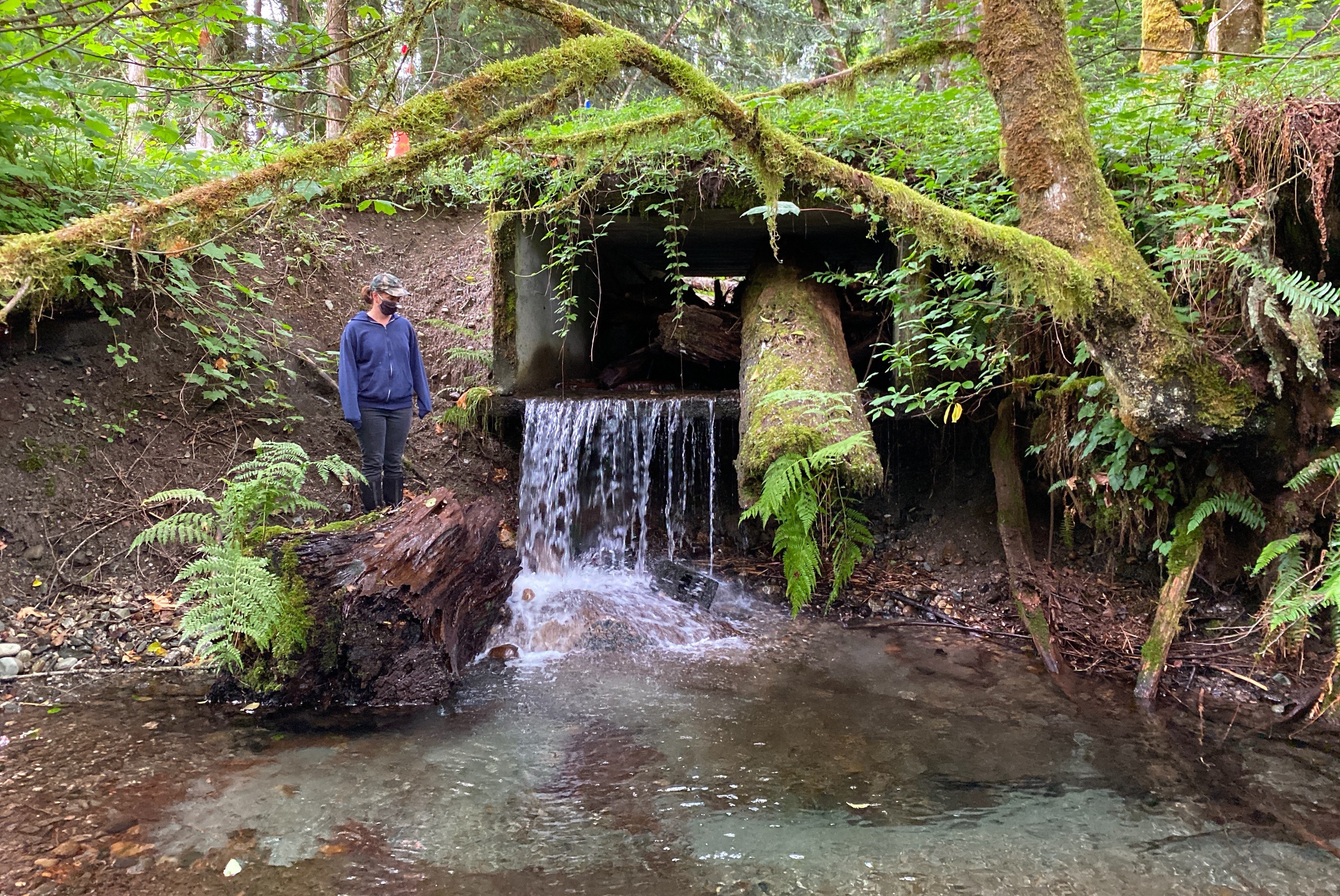
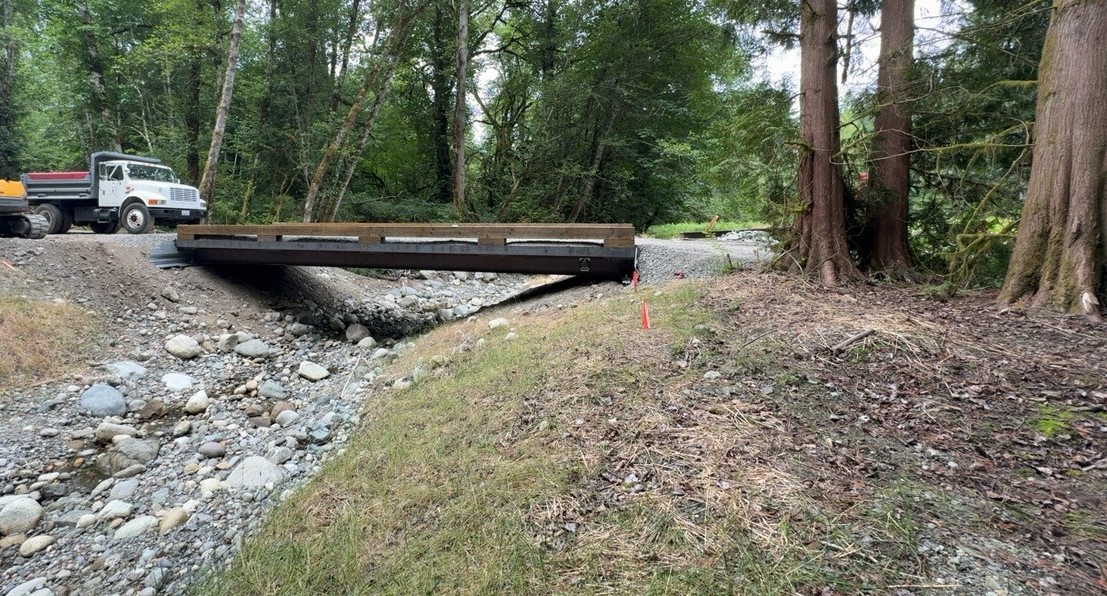
Description: This project was focused on improving fish passage at Barrel Springs and Dry Creek by removing a dam and three culverts that were blocking access to fish habitat. The dam and one of the culverts were failing, threatening to release sediment that would harm fish downstream. Two of the culverts were perched above stream level, preventing access, and all three were undersized. The three culverts were replaced with two bridges and one fish-passable culvert.
Benefits: This project...
- Improves fish passage.
- Opens 1.12 acres of stream habitat.
- Provides shade and resting areas along 2 miles of stream.
- Reduces risk of erosion.
These changes benefit coho and chum salmon and cutthroat and steelhead trout.
Timeframe: 2023 – 2026
Partners: American Rivers
Consultants and Contractors: Interfluve, Interwest Construction Inc., Natural Systems Design
Funding Sources: American Rivers, Brian Abbot Fish Barrier Removal Board, Rose Foundation, Washington State Department of Ecology, Trout and Salmon Foundation
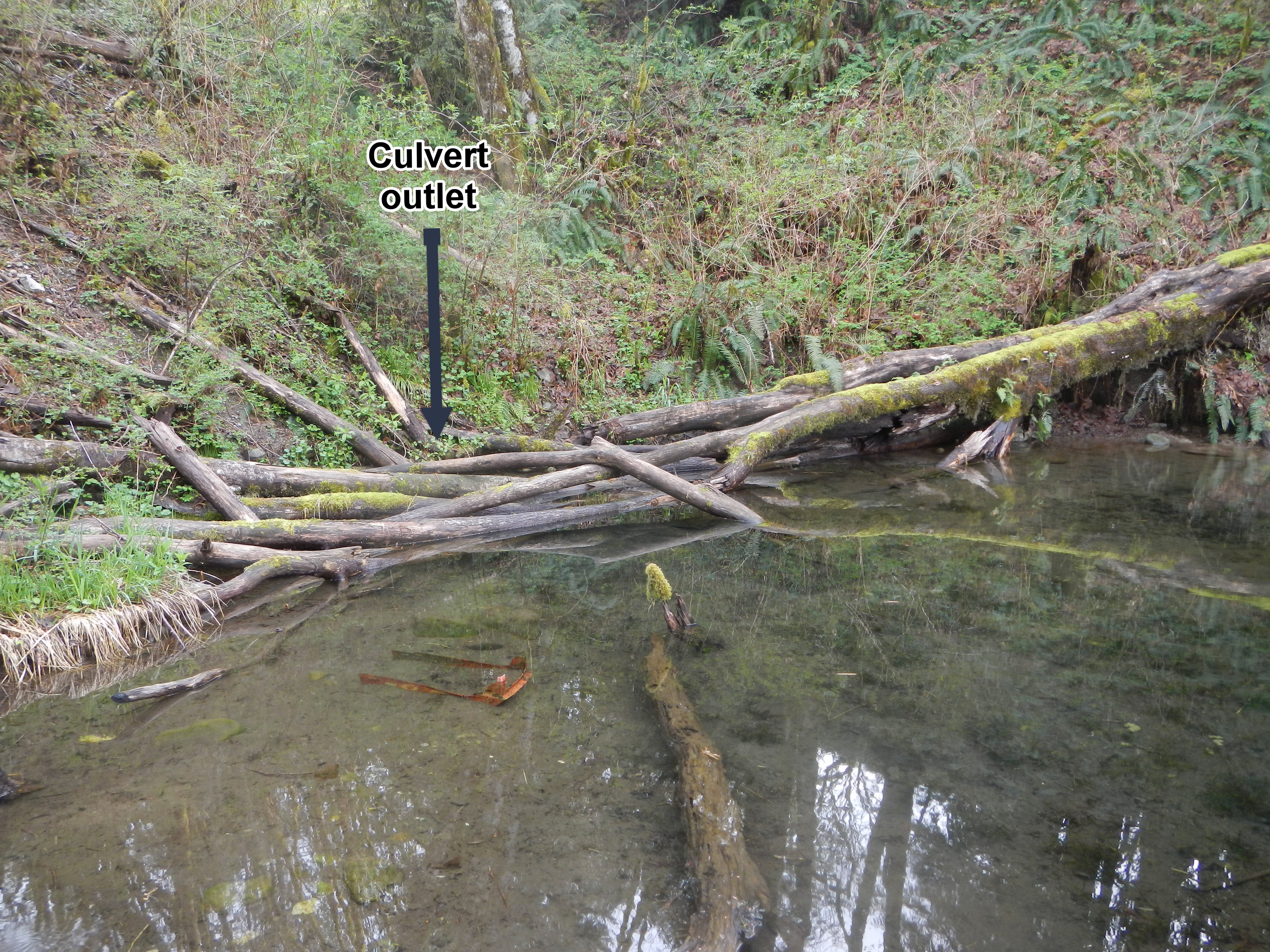
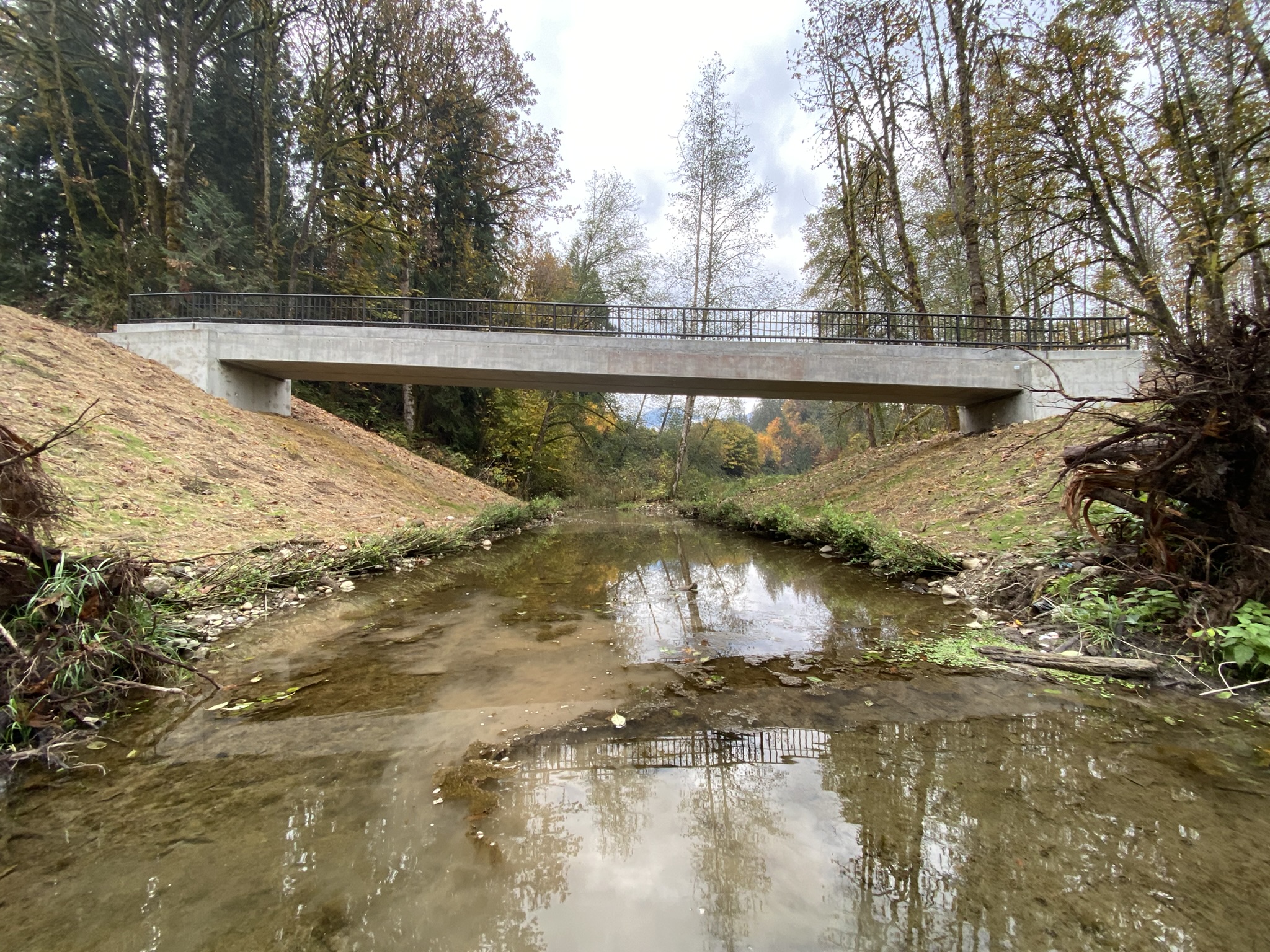
Description: This project was focused on improving fish passage within Ovenell Slough, which was constricted by a 2-foot-wide, 80-foot-long culvert buried under almost 18 feet of fill. This culvert restricted fish passage to acres of upstream habitat.
Skagit County and partners removed the culvert and replaced it with a 77-foot-long pedestrian bridge with a 24-foot-wide opening for the stream to flow underneath, then replanted the streambanks with native vegetation.
Benefits: This project…
- Improves fish passage.
- Opens 2.4 acres of upstream habitat ideal for fish rearing.
- Improves habitat using native vegetation.
These changes benefit fish including stickleback, cutthroat, coho, Chinook, and longnose dace. The project also benefits residents who can use the pedestrian bridge to access Washington State Department of Fish and Wildlife property north of Ovenell Slough.
Timeframe: 2022 to 2023
Partners: Skagit Fisheries Enhancement Group
Consultants and Contractors: KPFF Consulting Engineers, Natural Systems Design
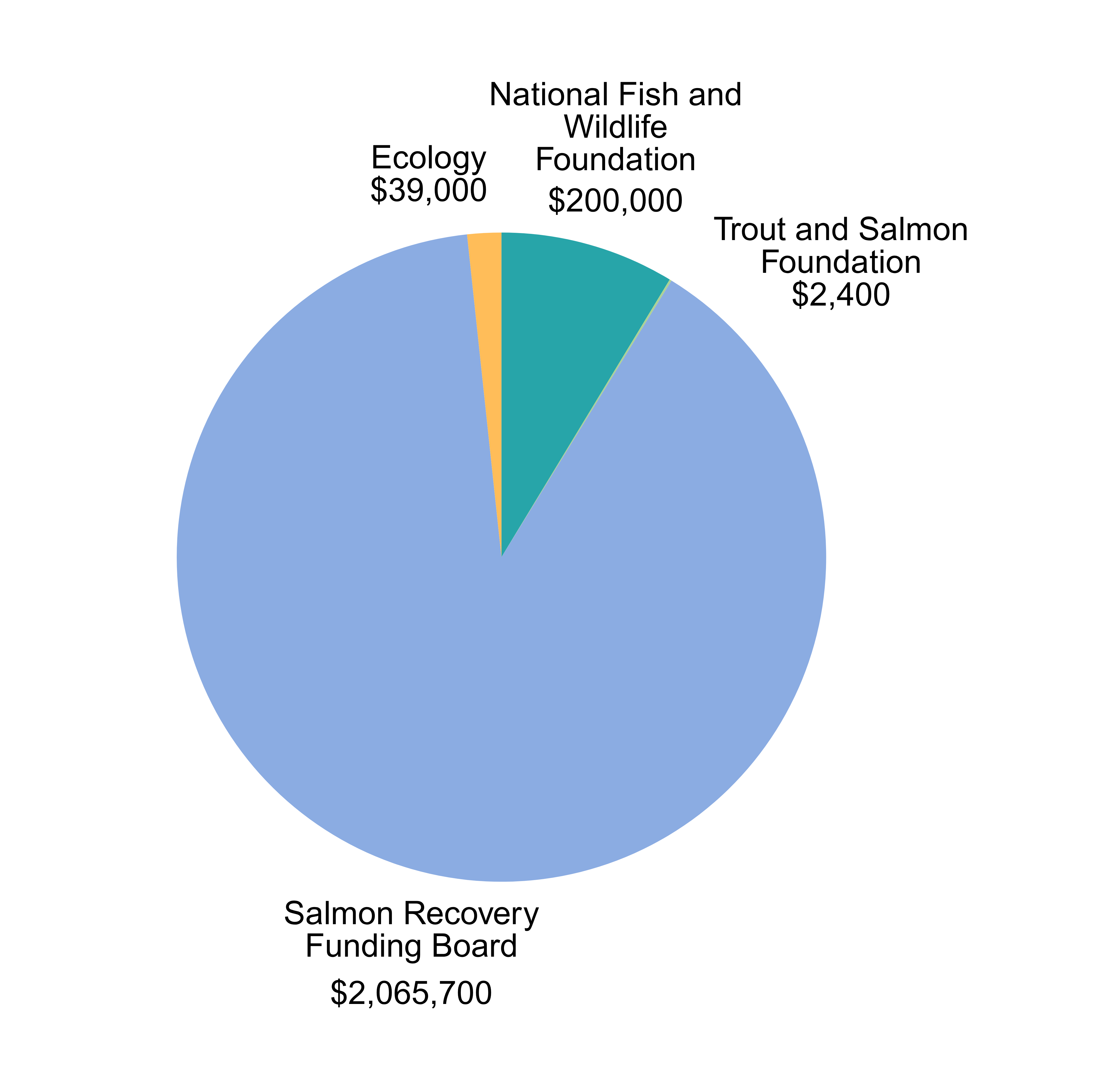
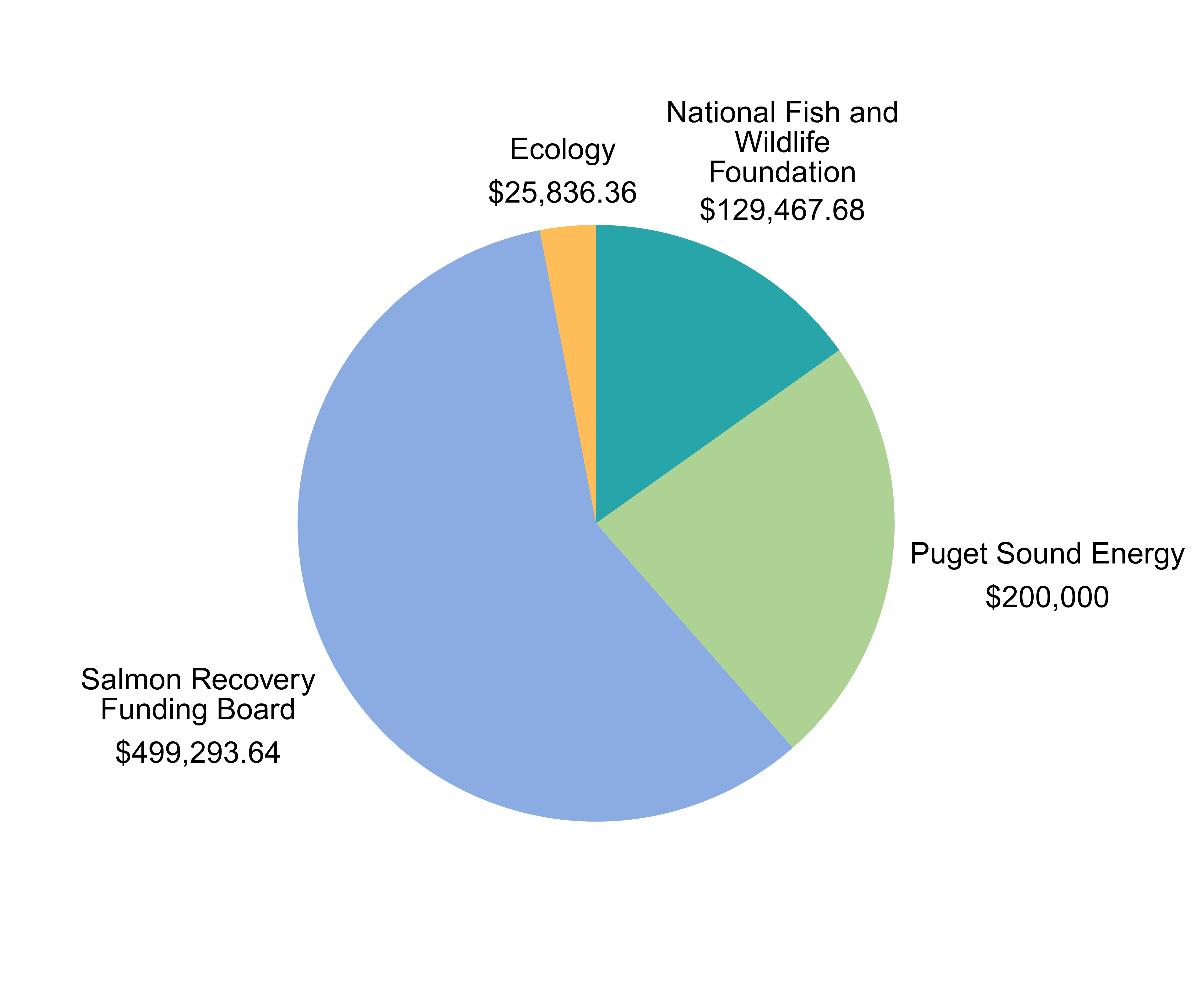
Funding Sources: National Fish and Wildlife Foundation (NFWF), Puget and Sound Energy (PSE), Salmon Recovery Funding Board (SRFB), Washington State Department of Ecology (Ecology)
Cost: $1,088,428.82
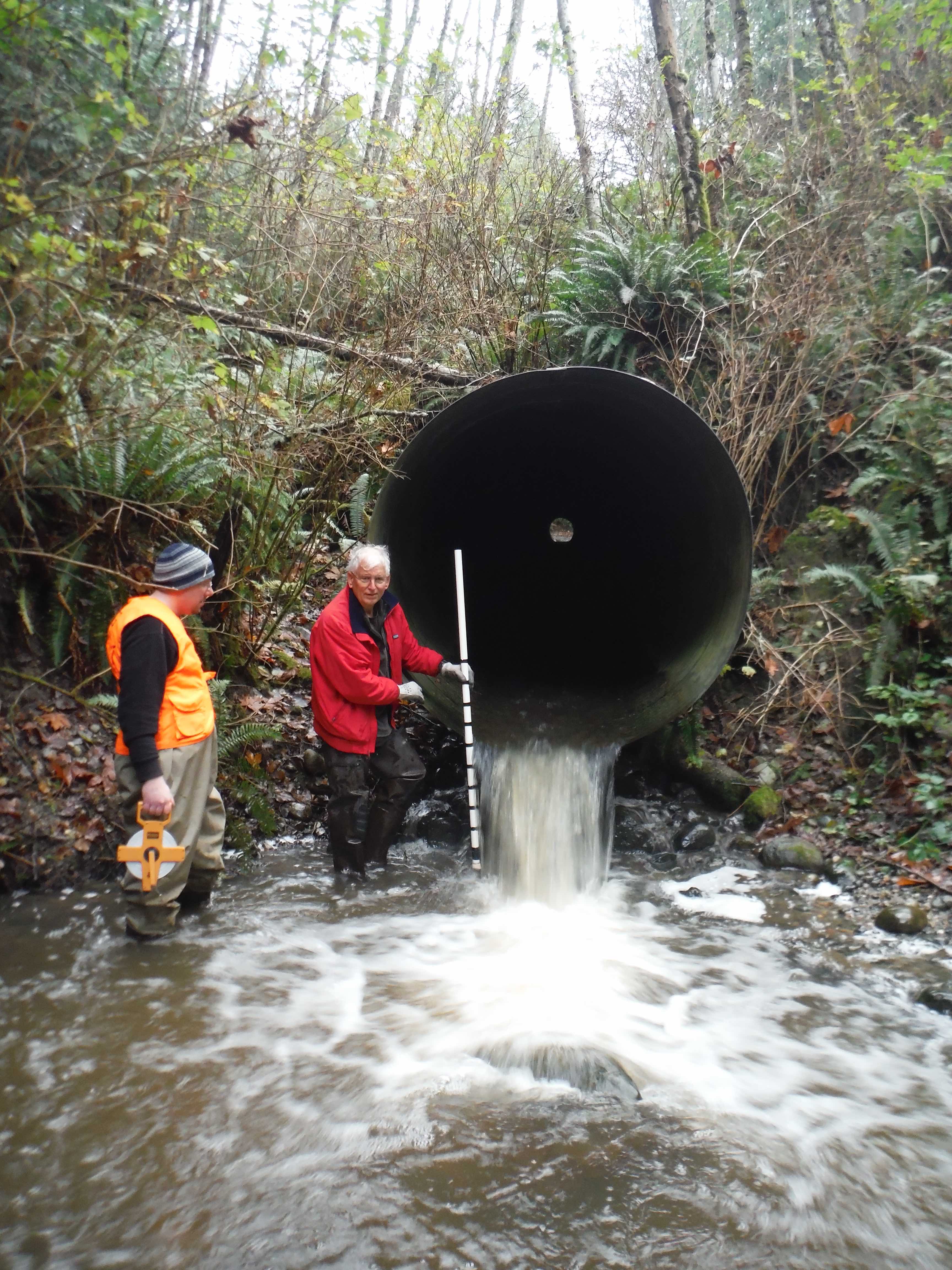
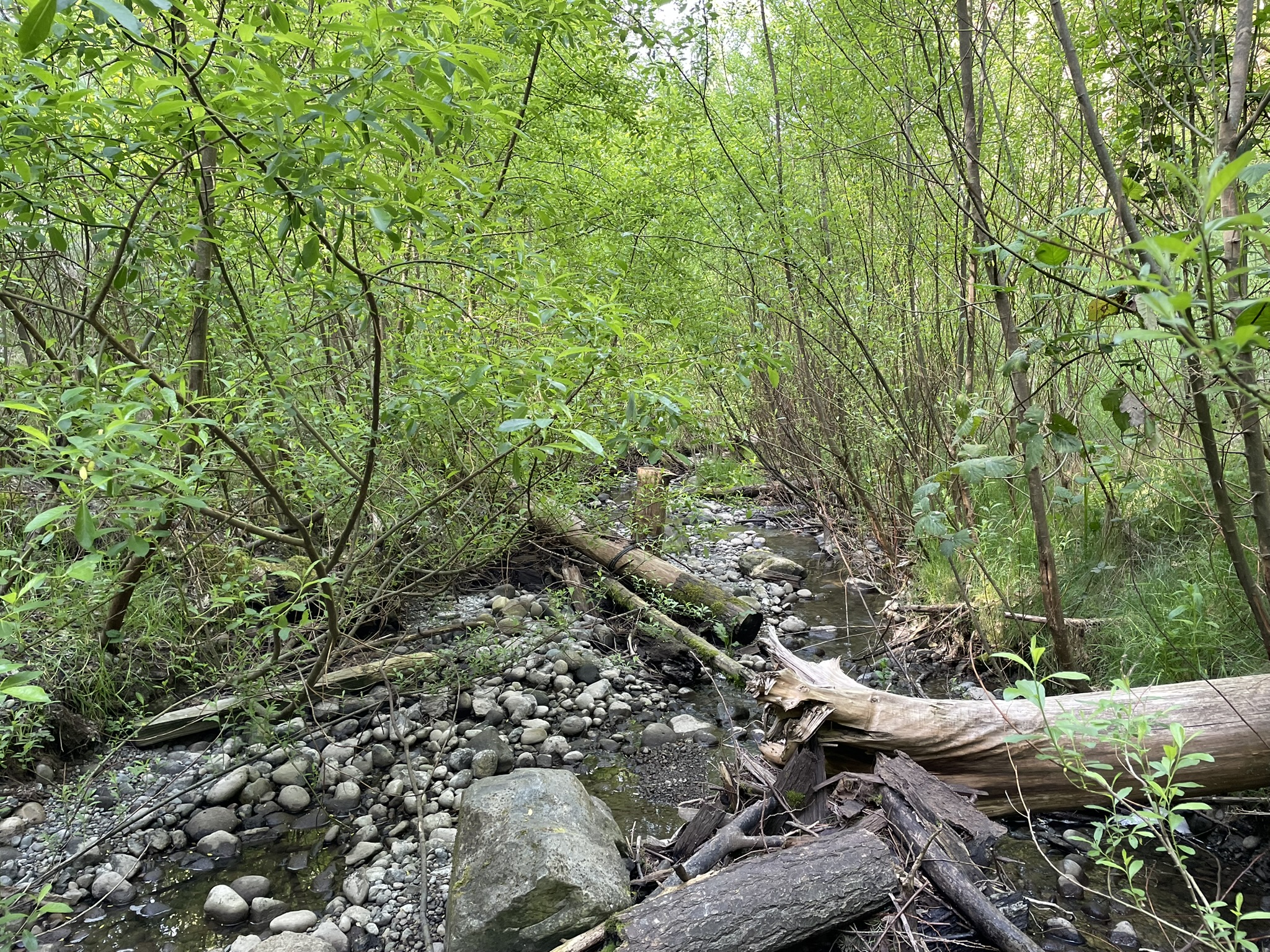
Description: This project focused on removing the perched and failing Maddox Creek culvert, restoring the stream channel, and planting native vegetation to further stabilize the area. The culvert was 210 feet long, perched three feet above stream level, and covered by approximately 15,000 cubic yards of fill. It was installed as a barrier to fish in the 1960s. It blocked fish from reaching important upstream habitat and was causing channel erosion.
Skagit County removed the culvert and daylighted the stream, then added large woody debris and planted native plants along the streambanks
Benefits: This project…
- Improves fish passage.
- Opens up 4.2 miles of habitat.
- Reduces erosion.
- Improves habitat using native vegetation.
This project benefits fish including coho, chum, and pink salmon and steelhead, resident, and sea run cutthroat trout.
Timeframe: 2018 to 2021
Partners: City of Mount Vernon, Tom Slocum and Skagit Conservation District, Washington Conservation Corps
Consultants and Contractors: EarthCorp, ERCI Inc., Pacific Survey and Engineering, Williamson Construction
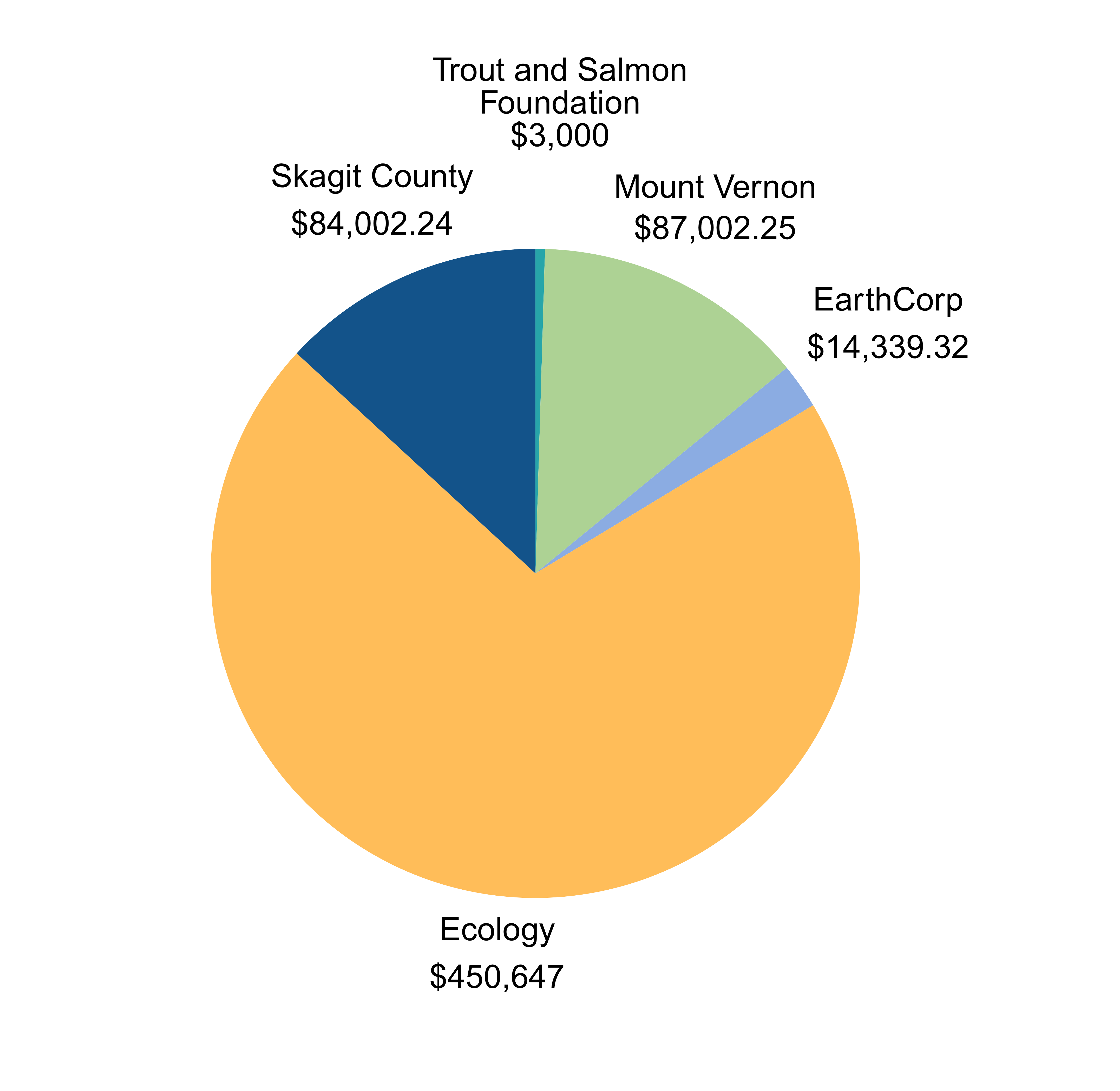
Funding Sources: City of Mount Vernon (Mount Vernon), EarthCorp, Skagit County Roads, Skagit County Drainage Utility, the Trout and Salmon Foundation (TSF), Washington State Department of Ecology (Ecology)
Cost: $646,152.33
Special Acknowledgement: Kurt Buchanan, a retired habitat biologist with the Department of Fish and Wildlife, and Hal Lee, a neighboring community member, have assisted the project through years of advocacy for improving the habitat of Maddox Creek. Without their gentle prodding and enthusiastic encouragement over all these years the unused culvert on Maddox Creek would likely be blocking passage to fish today.
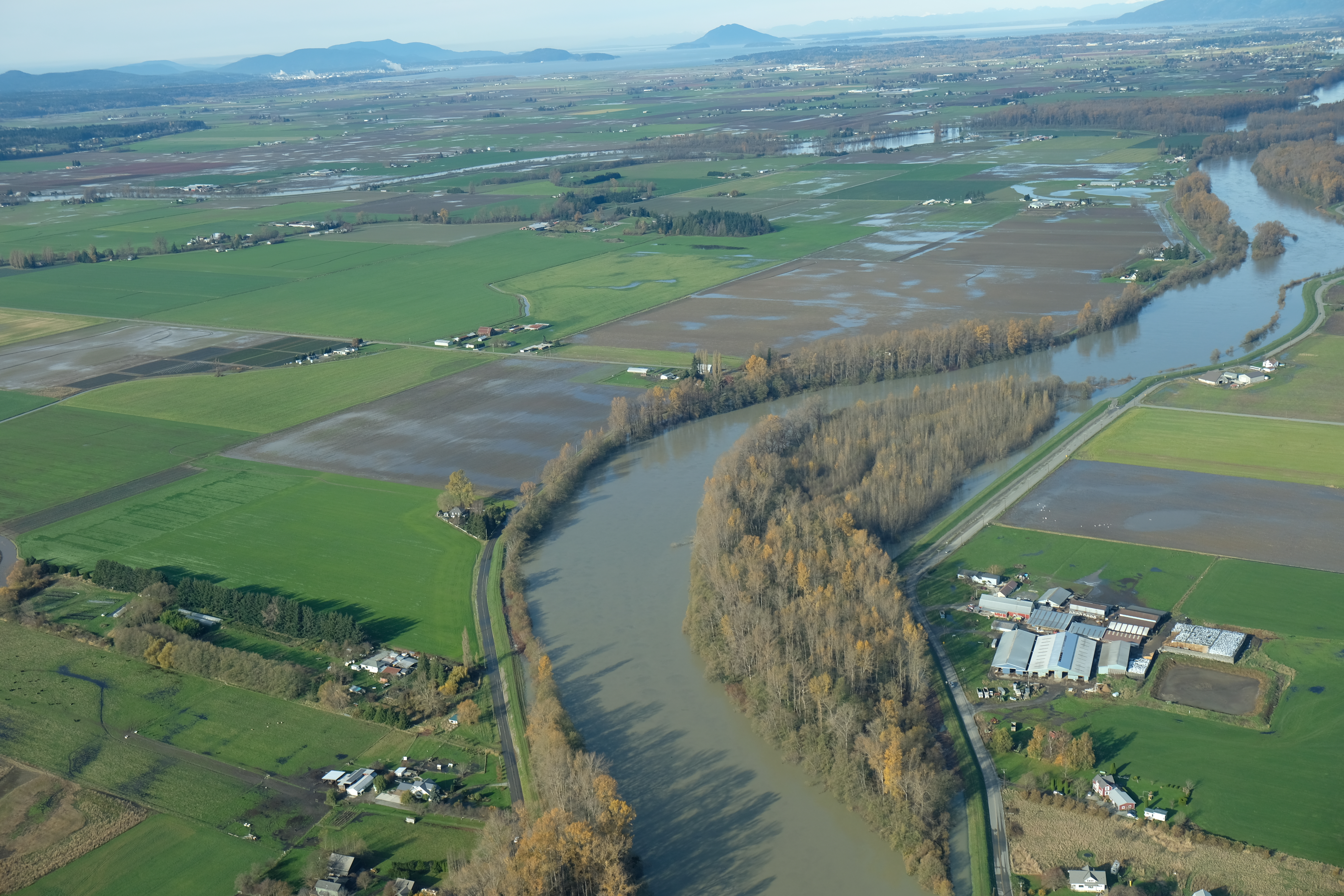
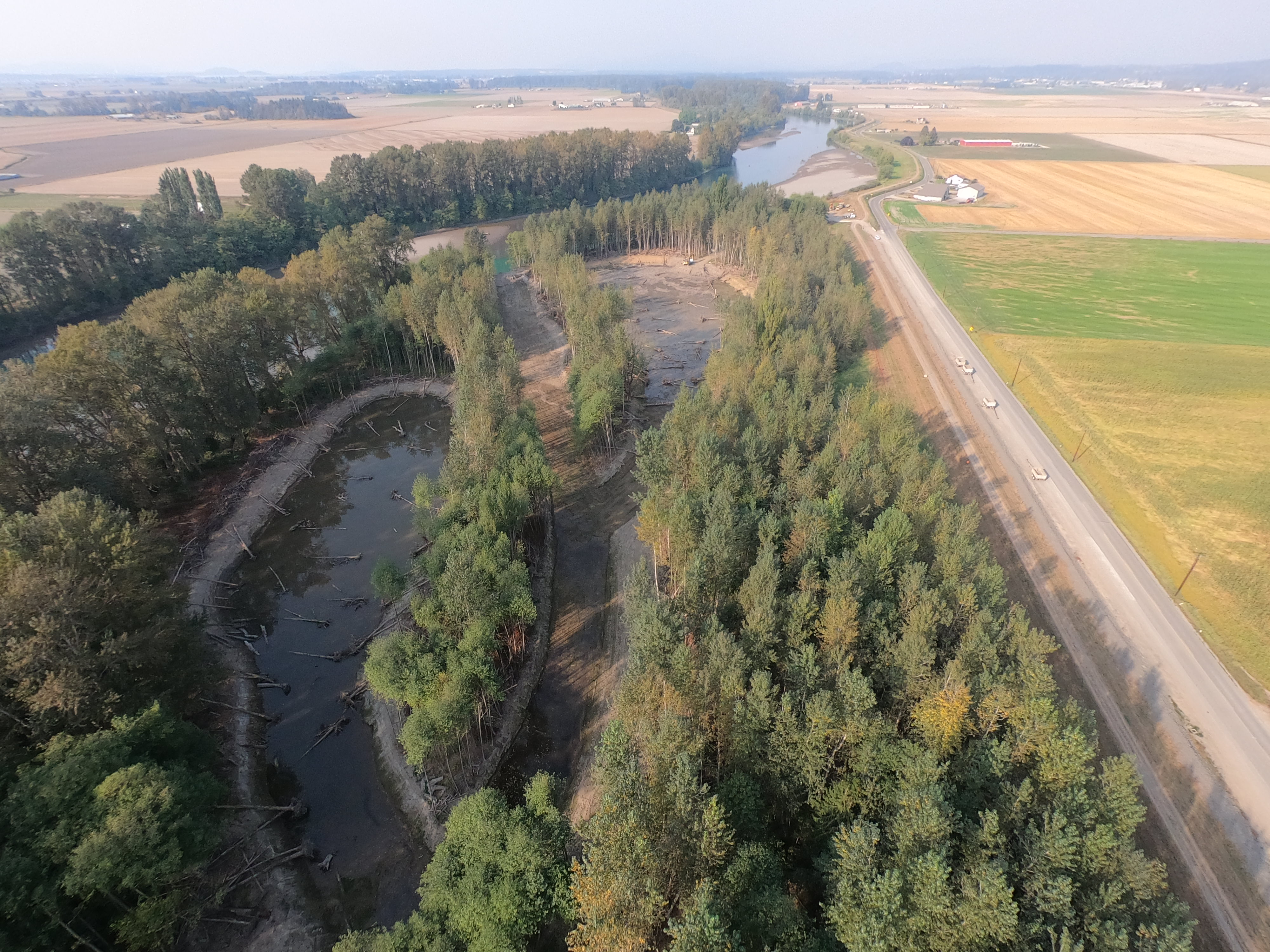
Description: The South Fork Skagit River delta restoration focused on improving and expanding salmon habitat that was originally limited by the levee. The project began with a levee setback project in 2003 that focused on replacing the original levee with one that allowed for increased habitat size and let salmon return to a historic tidal channel. The second phase (2023) was to build on the success of the 2003 project and build additional habitat.
Benefits: This project…
- Increases Chinook salmon carrying capacity in a priority area by increasing the wetland habitat of the site from zero to 5.3 acres.
- Reestablishes the natural hydrologic exchange of the Skagit River, floodplain, and freshwater channels.
- Improves habitat through the removal of invasive plants and the addition of native vegetation.
Timeframe: 2019 to 2023
Partners: Skagit Fisheries Enhancement Group
Consultants and Contractors: AnchorQEA, GeoEngineers, Skagit Fisheries Enhancement Group, Tiger Construction
Funding Sources: National Fish and Wildlife Foundation (NFWF), Salmon Recovery Funding Board (SRFB), Trout and Salmon Foundation (TSF), Washington State Department of Ecology (Ecology)
Cost: $2,307,100