Air Quality
Department of Emergency Management
Wildfire smoke and other pollutants can affect air quality throughout Skagit County, even when the source is far away. Smoke contains very small particles and gases that can enter the lungs and bloodstream and cause health problems.
Know the Risk
Smoke is unhealthy for everyone. Children and youth, older adults, pregnant people, and people with heart or lung conditions may be at greater risk from smoke exposure.
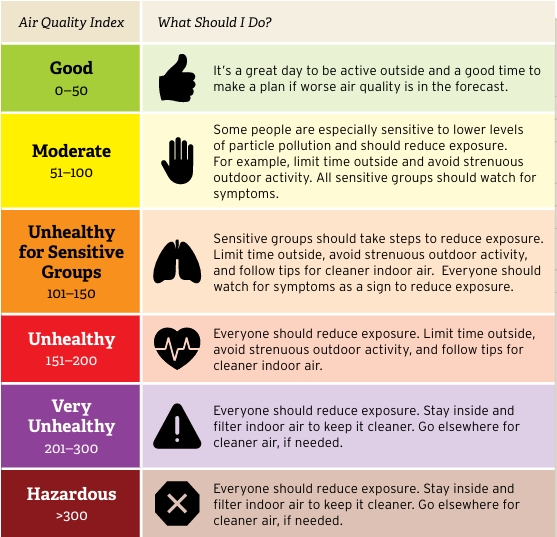
Use the Air Quality Index (AQI) to understand current conditions and determine when additional precautions may be needed. Current and forecast air-quality information is available through Washington’s air-quality resources and AirNow.
Before Smoke Arrives
Know the AQI scale. Monitor AirNow.gov for real-time Air Quality Index readings. Green (0–50) is good. Yellow (51–100) is moderate. Orange (101–150) is unhealthy for sensitive groups. Red (151–200) is unhealthy for everyone. Purple and maroon levels require everyone to stay indoors.
Have N95 masks on hand. N95 and KN95 masks filter fine particulate matter. Surgical masks and cloth masks do not provide meaningful protection from wildfire smoke. Keep at least two per person in your go-bag and home.
Prepare to shelter in place. Identify the best room in your home to shelter — ideally one with few windows and doors. Keep an air purifier with a HEPA filter if possible. Have duct tape and plastic sheeting available for sealing gaps.
Know the 'What's That Smell?' signals. If you detect unusual chemical odors near the refinery corridor, go inside, close windows and doors, turn off HVAC, and monitor Skagit Ready Alerts and local media for official guidance.
During Poor Air Quality
Reduce the amount of time you spend outdoors and the intensity of outdoor activity.
Keep indoor air as clean as possible. Close windows and doors when outdoor air quality is poor if indoor temperatures remain safe.
If you must spend time outdoors, a properly fitted NIOSH-approved particulate respirator such as an N95 can reduce exposure to smoke particles.
If keeping windows closed makes your home dangerously hot, protecting yourself from extreme heat also becomes a priority. Consider going to a cooler indoor location with cleaner air.
After
When air quality improves, there are a few steps you can take to help clear indoor air and get back to regular activities:
Ventilate your home. Open windows and doors to bring in fresh outdoor air once the AQI returns to healthy levels.
Check indoor air filters. Replace or clean HVAC filters and portable air purifier filters—these can collect a lot of smoke and particles during poor air quality events.
Clean surfaces and vacuum carefully. Dust, ash, and particles can settle indoors. Use a damp cloth to wipe surfaces and a vacuum with a HEPA filter.
Continue monitoring AQI. Air quality can change quickly, especially during wildfire season. Keep checking reliable AQI sources so you know if conditions worsen again.
Spend time outdoors gradually. If you avoided outdoor activities during poor air quality, ease back in—especially for children, older adults, or anyone with breathing issues.
Watch for lingering symptoms. If anyone in your household experiences coughing or breathing discomfort after air quality improves, give them time to recover and limit strenuous activity.

Address
2911 E. College Way Ste. B
Mount Vernon, WA 98273
Hours
Monday – Friday
8:00 AM to 4:30 PM
BY APPOINTMENT ONLY
Contact Us


